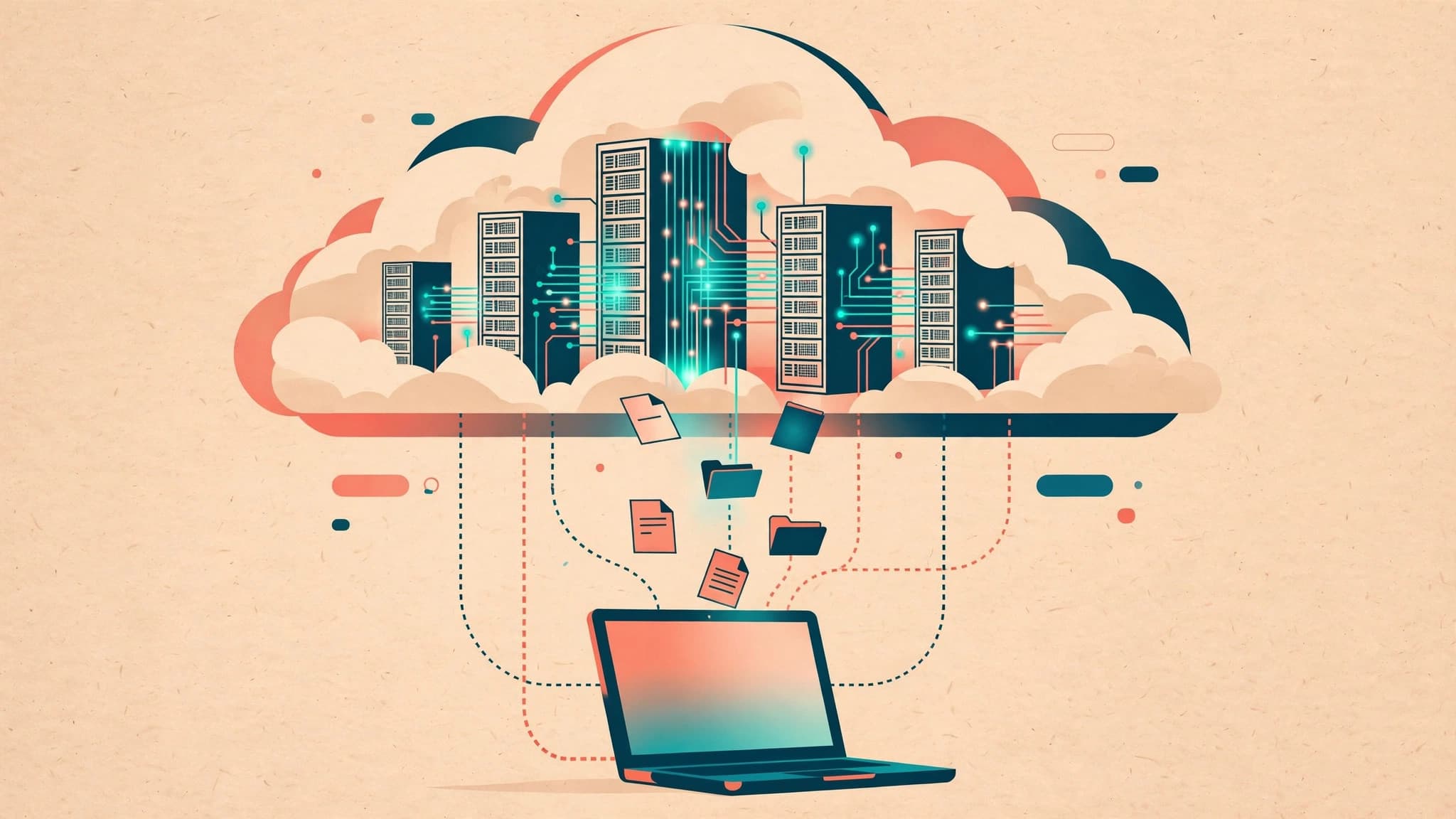
Every app you use "runs in the cloud." The phrase is so common it has stopped meaning anything. Here is the simple version: the cloud is someone else's computer, rented to you by the minute, managed over the internet.
The simple definition
Instead of buying and maintaining servers, companies rent computing from providers with giant data centers. You get a slice of a massive machine farm, configurable in minutes, and you pay for what you use. That is the entire idea.
IaaS, PaaS, SaaS — plainly
- IaaS (Infrastructure): renting raw machines. You manage everything on them. Maximum control, maximum work.
- PaaS (Platform): renting a ready environment — you bring code, they handle servers. The sweet spot for student projects.
- SaaS (Software): renting finished software — Gmail, Canva, Google Docs. You are a cloud user already.
Why companies actually use it
Three reasons: no upfront hardware cost, scale up or down instantly (a sale spike does not crash the site), and someone else handles the physical machines. For startups, it turned "launch a global service" from a capital project into a weekend project.
The student angle: generous free tiers
Major cloud providers offer free tiers enough to host real projects — a portfolio site, a small API, a database. Deploying one real project to the cloud is one of the highest-value things a CS student can do.
Common misconceptions
The cloud is not magic or infinitely reliable — outages happen. It is not automatically cheaper at large scale. And "serverless" still involves servers; you just never see them.
Where to start hands-on
Pick one provider's free tier, follow their "deploy your first app" tutorial, and ship something tiny this month. Cloud computing stops being abstract the moment you have a live URL you deployed yourself.