You do not need to become a security expert. But students are prime targets — new bank accounts, university portals full of personal data, and a habit of clicking fast. A few habits cover most of the risk.
Your threat model
Attackers rarely "hack" students with movie-style exploits. They phish (trick you into handing over credentials), reuse your leaked passwords from breached sites, and exploit unpatched software. Defend against the common stuff and you are ahead of nearly everyone.
Passwords, done right
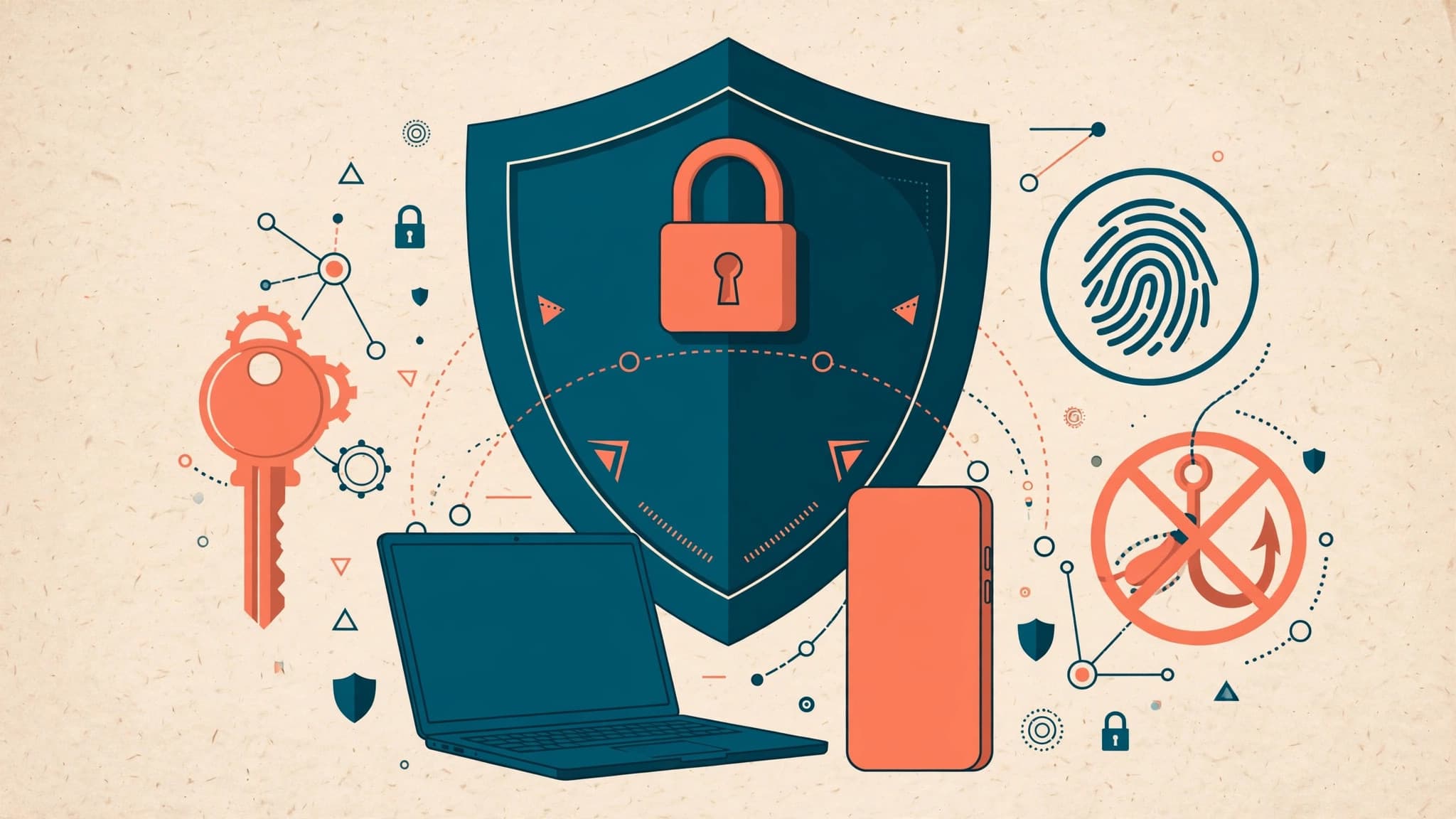
One unique, random password per site, stored in a password manager. Reusing passwords means one breach anywhere becomes a breach everywhere. Add two-factor authentication to email, banking, and university accounts — your email especially, since it resets everything else.
Spotting phishing
Check the sender address, not just the display name. Hover links before clicking. Urgency ("your account will be suspended in 24 hours") is the universal red flag. Universities and banks never ask for passwords by email or message.
Public Wi-Fi
Campus and cafe networks are convenient and exposed. Avoid banking or sensitive logins on open networks, or use your phone's hotspot instead. A VPN adds a layer, but it does not make you invincible — habits matter more.
Updates and backups
Install updates promptly; most fix known vulnerabilities. Back up important work in two places (cloud plus an external drive, for example). Ransomware is rare for students, but a dead laptop the week before finals is not.
Social engineering on campus
"Hi, I'm from IT, I need your password to fix your account" — real IT never asks. Neither do scholarship officers, prize notifications, or anyone offering easy money. Verify through official channels before sharing anything.
Security is mostly boring consistency: unique passwords, two-factor on, updates installed, think before you click. Boring is the point — it works.