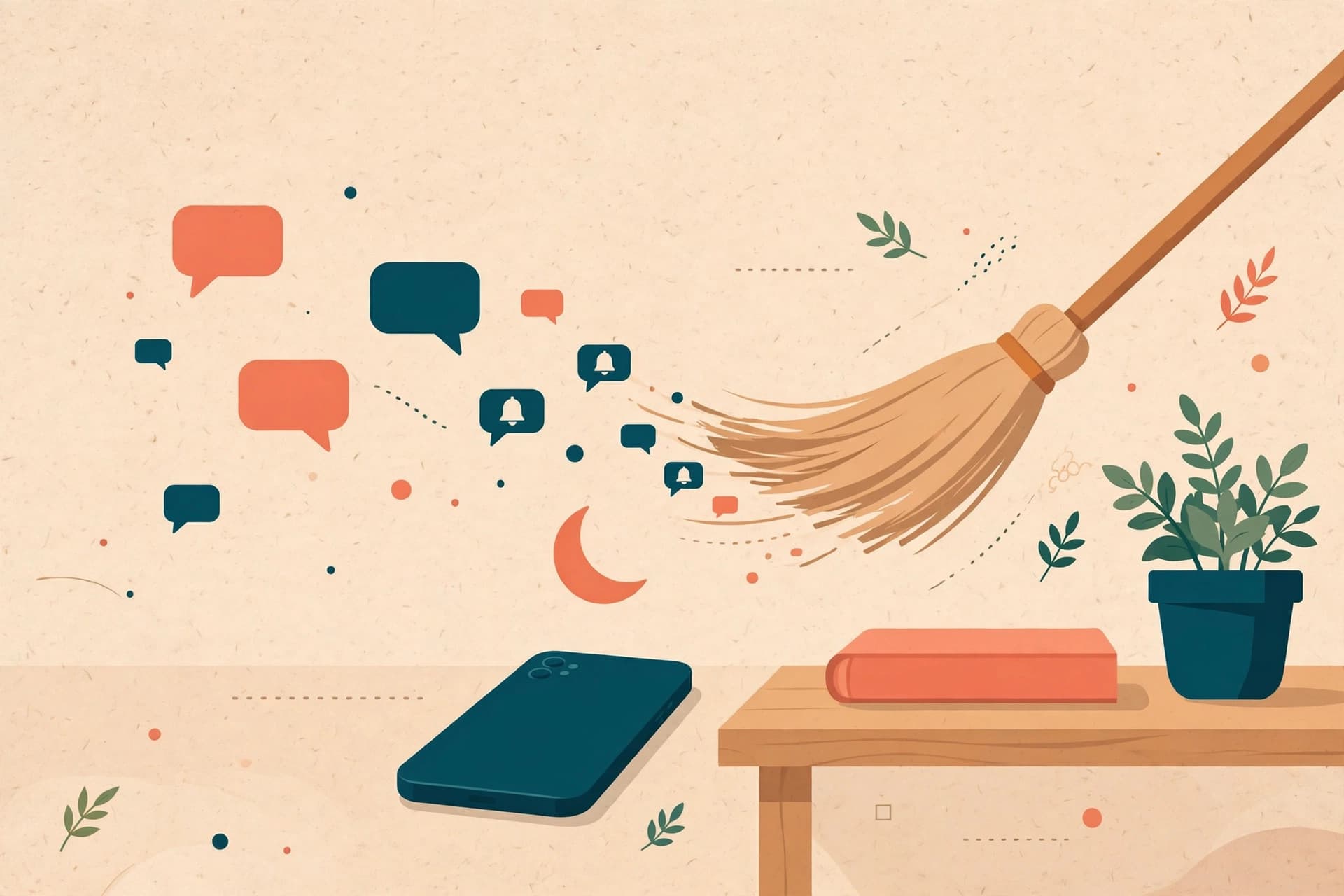
The average student checks their phone dozens of times a day, each check a small withdrawal from the attention account that studying, creating, and thinking draw on. Digital minimalism is the philosophy of spending that attention on purpose.
The attention economy, briefly
Apps are engineered to capture your time — infinite scroll, autoplay, and notifications are design choices, not accidents. Recognizing this is not paranoia; it is the first step to opting out of being the product.
Step 1: Audit honestly
For three days, note every app you open and why. Most people discover two or three apps consuming hours with nothing to show. You cannot fix what you have not measured.
Step 2: The 30-day declutter
Remove the worst offenders for a month — not forever, which makes it easier to start. Notice what you miss (often: nothing) and what fills the space (often: better things).
Step 3: Rebuild intentionally
Reintroduce technology on your terms, each with a job: this app is for messaging family, this one for learning, this one stays off the phone entirely. Every app needs a reason to exist in your life.
Step 4: Set up your phone to serve you
Turn off all non-human notifications. Move distracting apps off the home screen. Use grayscale or focus modes during study hours. Make the good behaviors easy and the bad ones slightly annoying — friction is a feature.
What actually changes
Students who do this report the same things: longer focus stretches, less background anxiety, more reading, better sleep. Nobody reports missing the scroll.
You do not need to become a hermit. You need your tools to be tools again — picked up for a purpose and put down when done. That is the whole philosophy, and it is enough.