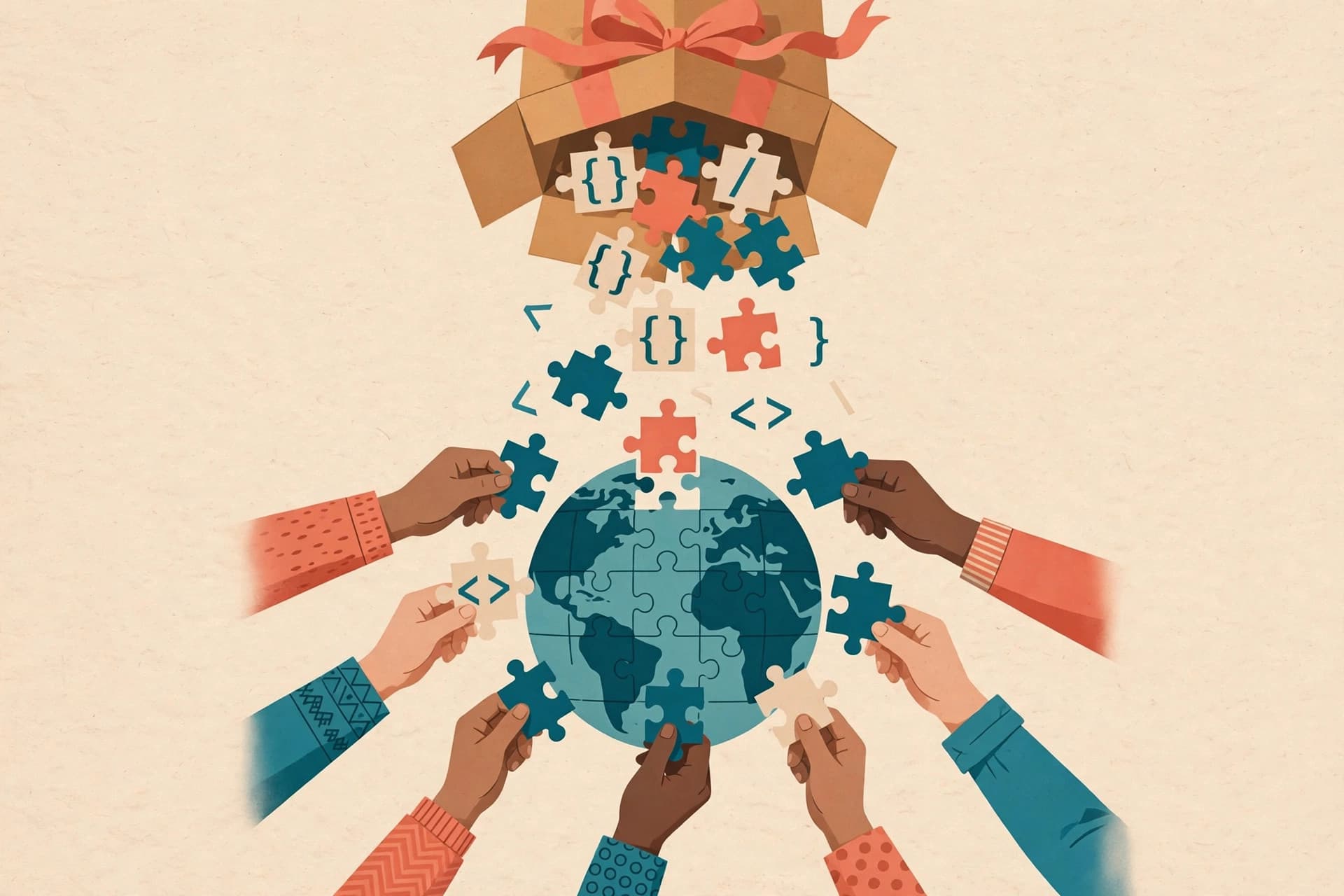
Somewhere right now, a maintainer is grateful for a stranger's pull request. Open source is the global collaboration machine underneath modern software — and students are welcome in it.
What open source actually is
Software whose code is public and improvable by anyone. The tools you use daily — languages, frameworks, editors — are largely built this way, by distributed volunteers and company engineers working in the open.
Why students should contribute
Three reasons: you learn to read real codebases (a different skill from writing tutorials), you get feedback from experienced developers, and your work is publicly visible proof of ability. Few activities build all three at once.
Finding your first issue
Look for labels like "good first issue" or "beginner-friendly" on projects you already use. Start small: documentation fixes, typo corrections, or reproducing a reported bug. Small merged contributions beat ambitious abandoned ones.
Your first pull request, step by step
Fork the repository, create a branch, make the change, write a clear description of what and why, submit. Then respond to review feedback graciously and promptly. The social part matters as much as the code.
Etiquette that gets you welcomed
Read the contributing guide first. Search existing issues before opening new ones. Be patient — maintainers are volunteers. Say thank you. These basics put you ahead of most first-timers.
Beyond code
Documentation, translations, design, testing, answering questions — projects need all of it. Non-code contributions count fully and are often the best on-ramp.
Keep going
One merged PR changes how you see yourself as a developer: from consumer to contributor. Make it a habit — a few contributions a year compound into a public record that speaks louder than any CV line.