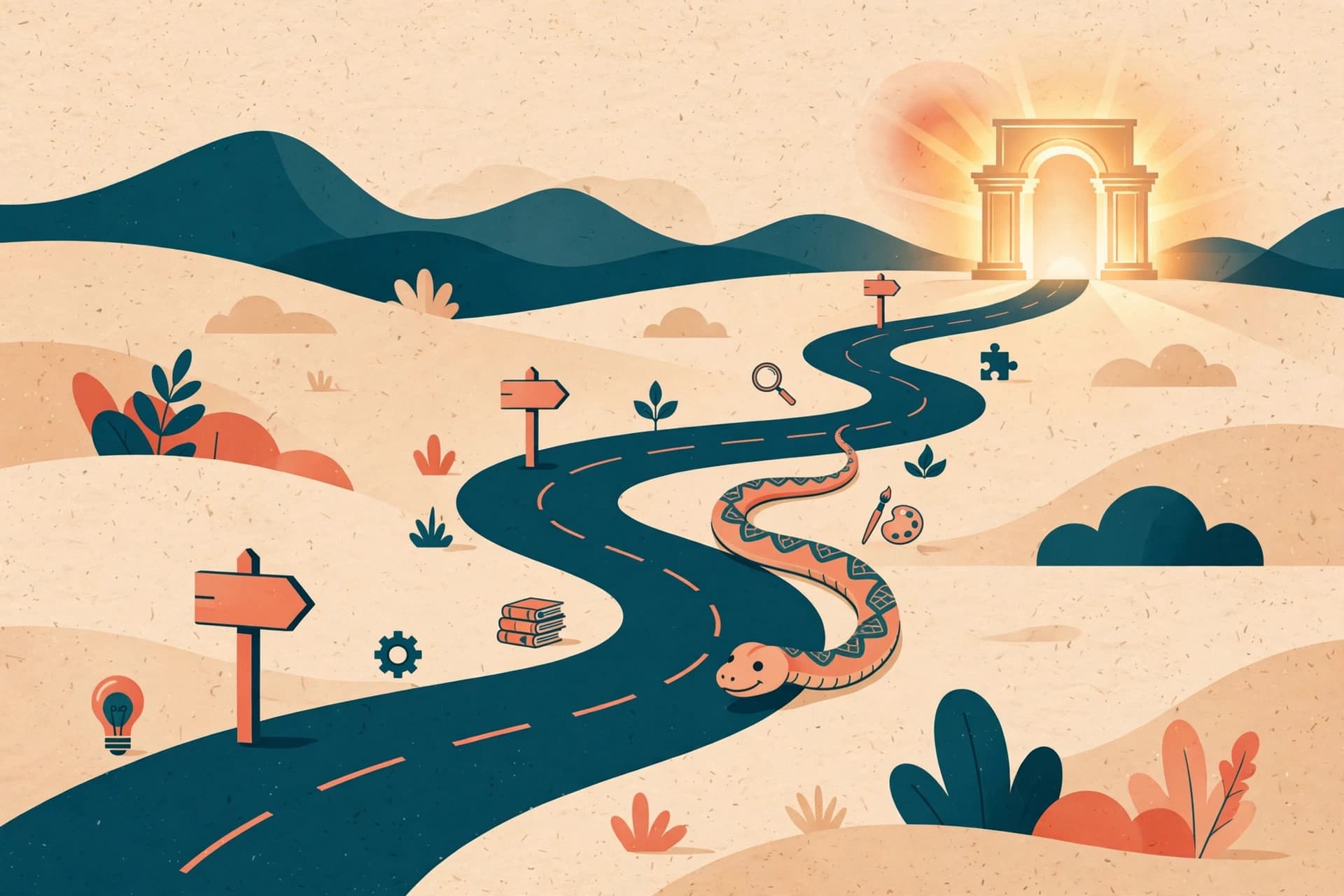
Python's beginner-friendliness is also its trap: endless tutorials, no clear order, and the nagging feeling you have learned everything and nothing. Here is the sequence that actually works.
Why Python first is fine
Readable syntax, huge community, and useful in web development, data, automation, and AI. It will not limit you — and switching languages later is far easier than learning the first one.
Phase 1: Fundamentals (weeks 1–4)
Variables, data types, conditionals, loops, functions, and basic data structures (lists, dictionaries). Write tiny programs daily — a calculator, a number guesser, a to-do list in the terminal. Boring? Yes. Foundational? Completely.
Phase 2: Thinking in programs (weeks 5–8)
File handling, error handling, modules, and an introduction to object-oriented basics. Start reading other people's code on GitHub — understanding code is a separate skill from writing it, and it develops slower.
Phase 3: Build real things (ongoing)
This is where learning actually happens: a web scraper, a personal expense tracker, a bot, a simple web app with Flask. Pick projects that solve your own small problems — motivation survives longer than curiosity.
Escaping tutorial hell
Tutorial hell is watching the tenth "complete Python course" without building anything alone. The cure is strict: for every hour of tutorial, spend an hour building without guidance. Stuck is fine — stuck means learning.
What comes next
After solid fundamentals: either web development (Flask/Django), data analysis (pandas), or automation scripting — pick based on what excites you. Depth in one direction beats shallow sampling of all three.
Learn in order, build constantly, and resist the urge to restart with a new course every month. The roadmap is simple; following it is the hard part.