Machine learning sounds intimidating until someone explains the core idea plainly: instead of writing rules for a computer to follow, you show it examples and let it find the patterns itself. That is nearly the whole trick.
The core idea
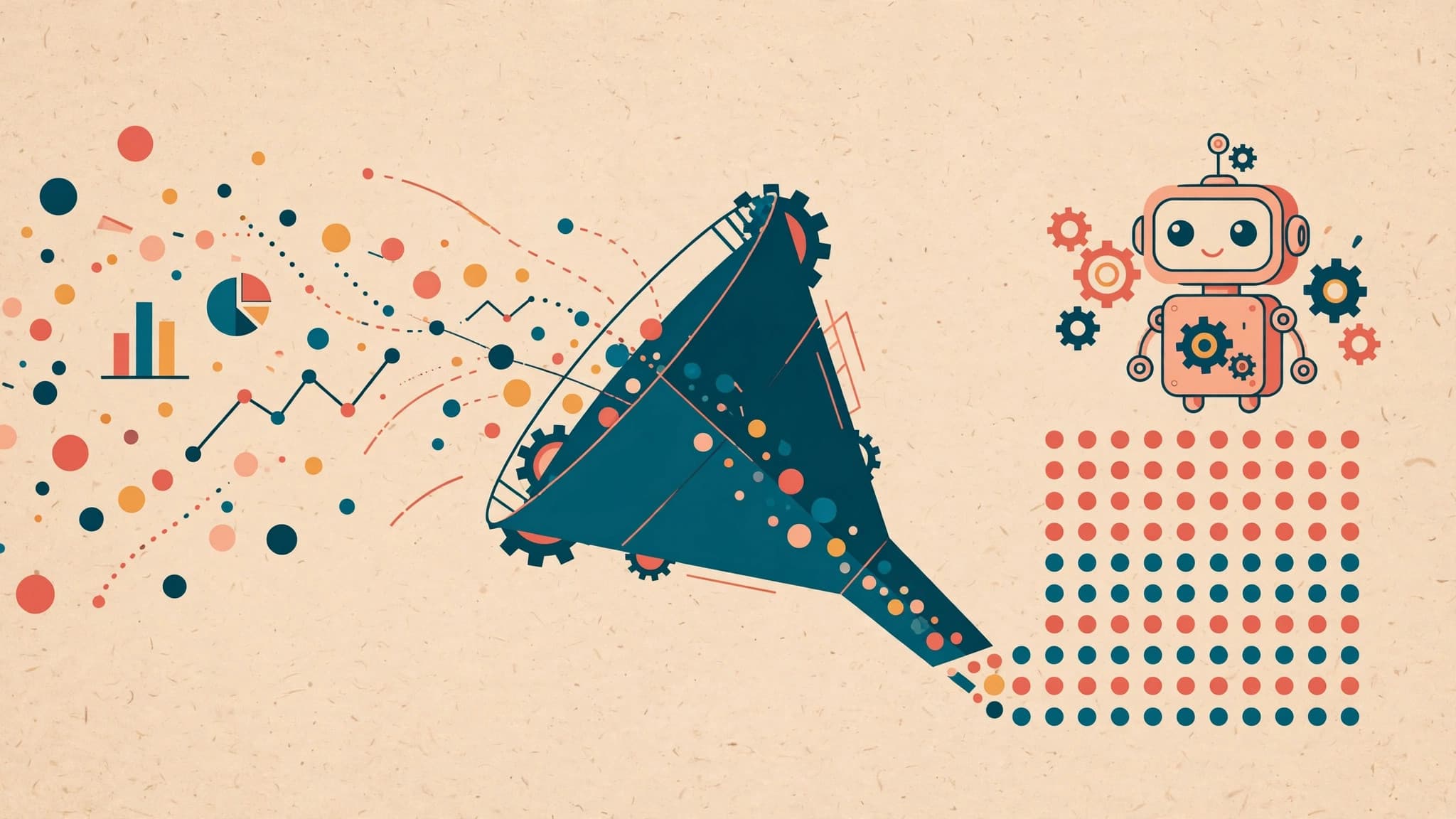
Traditional programming: a human writes rules ("if the email contains these words, mark it spam"). Machine learning: you feed the computer thousands of emails labeled spam or not-spam, and it figures out its own rules. Data in, patterns out, predictions on new data.
Supervised learning: learning from labeled examples
This is the most common type. You train on data where the answer is known — house prices with their features, photos labeled cat or dog — and the model learns to predict answers for new cases. Most practical ML you hear about is supervised learning.
Unsupervised learning: finding structure without labels
Here there are no right answers provided. The model groups similar things together — customers with similar habits, news articles on similar topics. Think of it as the computer organizing a messy room without being told the categories.
Reinforcement learning: learning by trial and error
An agent tries actions and gets rewards or penalties, gradually discovering good strategies. This is how AI learned to play complex games. It is powerful but data-hungry, so it is less common in everyday applications.
Where you already meet ML
Spam filters, video recommendations, autocorrect, face unlock, fraud detection on your bank card — machine learning is already infrastructure in your daily life. Recognizing it demystifies it.
What ML cannot do
It cannot learn from tiny datasets, it inherits biases in its training data, and it is confidently wrong about things outside its training. "The model said so" is never a complete argument.
How to start learning
Learn Python first, then take one beginner ML course and build one small project alongside it. Theory without a project evaporates; a project without theory hits a ceiling. Do both, in parallel, and the field starts feeling friendly fast.